


 Casino
Live Casino Tips for Smarter Real Dealer Play
Live casino games have revolutionised online gambling, offering an immersive experience that closely replicates the atmosphere of a physical casino.
May 18, 2026
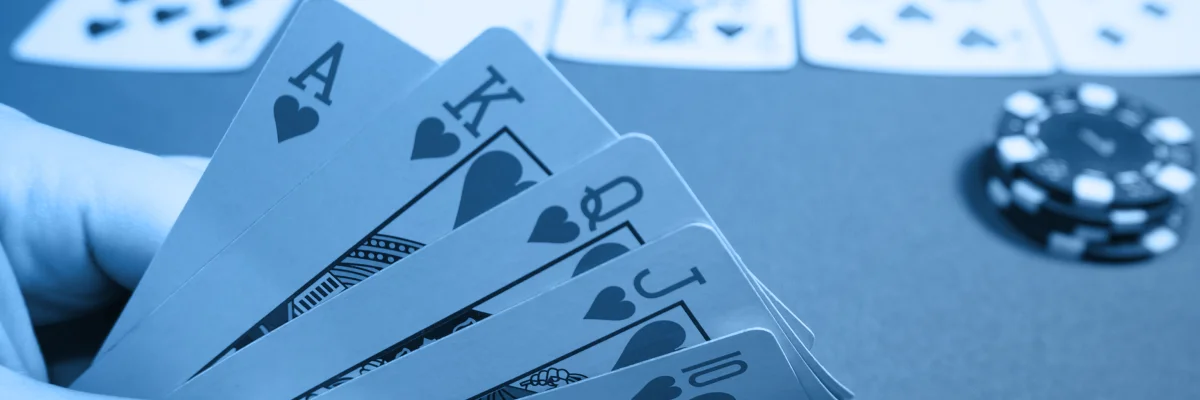
Five card draw strips poker down to its core. You receive five cards, make a plan, and accept the outcome. No community cards rescue weak hands, and no complexity hides poor decisions. That clarity keeps players coming back when they want to improve, not just pass time.
Free five card draw poker games offer the same strategic foundation without financial pressure. You can refine hand selection, practise discard decisions, and test betting discipline at your own pace. If you already explored online poker through a bitcoin poker guide, you will notice how quickly platforms evolve. Five card draw stays constant, rewarding thinking over trends.
The sections below break down the rules, strategy, and training methods that turn every session into real progress.
Five card draw centres on fundamentals such as hand strength, draw equity, and betting logic. Without shared boards to rescue weak starts, players must develop discipline early. Those who master this format often show stronger judgement in other variants because they respect probability and avoid chasing.
The format also creates a cleaner psychological contest. Five card draw slows decisions enough to allow observation and adjustment. Free five card draw poker games support this learning loop by allowing repeated practice, faster pattern recognition, and early correction of bad habits, including the discipline to fold when necessary.
Five card draw follows a simple, structured flow. You receive five private cards, play an opening betting round, discard and draw, then enter a final betting round before showdown. Success depends on executing each step cleanly rather than relying on complexity.
The betting logic remains consistent across platforms. You decide whether to continue based on your current hand strength, how much it can improve after the draw, and what your betting line communicates. Discipline consistently outperforms constant action.
Free five card draw poker games reflect this structure accurately, which makes them ideal for focused practice. Each hand should answer three questions: how strong your hand is now, how it might improve, and how your bet signals strength or weakness to opponents.
Strong five card draw begins with selective hand choice. You do not need volume; you need quality decisions. These principles keep play disciplined and consistent.
When you follow these rules, free five card draw poker games become a deliberate training environment. You quickly see why patience wins more consistently than forced action.
Discarding shapes every hand in five card draw. What you keep, what you discard, and what you signal to opponents all matter. Each choice blends probability with psychology.
Start with a clear plan. With one pair, keep the pair and discard three. With two pair, discard one to chase a full house while considering how much strength that draw reveals. With trips, keep them and discard two to target a full house or quads.
Flush and straight draws demand more care. Four to a flush usually justifies drawing one. Open-ended straight draws often do as well, but card ranks and opponent behaviour affect their value.
Free five card draw poker games let you test these decisions quickly. When a discard pattern fails repeatedly, adjust your strategy instead of blaming variance.
Betting does not just build pots. Betting builds narratives. In five card draw, that narrative matters even more because the draw reveals information through behaviour. Use these principles to keep betting deliberate.
Free five card draw poker games provide a safe place to practise this discipline. You can test aggression levels without risk, then keep what works and drop what leaks chips.
Online play removes physical tells but replaces them with behavioural patterns. In five card draw, players reveal information through how many cards they draw and how they bet. Careful observation removes the need for guesswork.
Start with draw size. Drawing one often signals strength or a strong representation. Drawing two usually points to trips or a two-pair upgrade attempt. Drawing three often suggests a weak one-pair hand or speculative play.
Then connect that draw to betting behaviour. A large bet after drawing three may indicate a bluff or an overly aggressive player, while cautious betting often signals real strength. Free five card draw poker games help you spot these tendencies quickly, including timing cues such as instant decisions or hesitation, which further refine your reads.
If you want progress, you need structure. Random volume does not create skill. Use this simple plan to turn practice into measurable improvement.
Free five card draw poker games work best when you treat them like a training lab. You should leave each session with a clear takeaway and a concrete adjustment.
At some stage, practice must translate into tougher play. You do not need high stakes immediately, but you do need to carry over discipline, planning, and emotional control.
Start with consistency. If you can explain your hand selection, discard plan, and betting goal on most hands, you have a strong base. Add pressure gradually by playing against stronger opponents or formats that demand greater focus.
Free five card draw poker games still support this step. They let you rehearse specific situations and warm up before serious sessions. On platforms such as betpandacasino.io, you can stay focused on structure rather than impulse, treating every hand as a decision. This approach often proves the best way to learn poker because it rewards deliberate improvement over short-term luck.
Five card draw rewards clear thinking and purposeful play. It reduces poker to decision quality, which makes it one of the strongest formats for developing real skill. Free five card draw poker games let you practise hand selection, discard logic, and betting discipline without financial pressure.
With structure, free play becomes effective training. You build habits that carry into tougher formats and gain confidence through preparation, not guesswork. betpandacasino.io supports this approach by pairing modern play with classic fundamentals.
This format suits players who want to improve their poker, not just increase volume.
Live casino games have revolutionised online gambling, offering an immersive experience that closely replicates the atmosphere of a physical casino.

Artificial intelligence (AI) is rapidly transforming the landscape of online gambling, ushering in a new era of smarter, more personalised, and immersive casino experiences.

Plinko has become a favourite among online casino enthusiasts, blending the thrill of chance with the intrigue of strategic decision-making.

Craps is one of the most iconic and energetic games found in both physical and online casinos.

The Don't Pass Line is a fundamental wager in craps, allowing players to bet against the shooter rather than with them.
Teen Patti, often known as "Indian Poker," is a captivating card game rooted in centuries-old traditions and modern-day strategy.
Baccarat has long been a favourite at both traditional and online casinos, thanks to its elegant simplicity and fast-paced action.

C betting poker is a cornerstone of modern post-flop strategy, influencing every hand and shaping the flow of play at the tables.
Blackjack is a game of skill, mathematics, and intuition - far more than just luck.