


 Casino
What Does a $20 Deposit Cost in BTC vs ETH vs USDT? A Fee Breakdown
A $20 crypto casino deposit can cost you anywhere from less than $0.01 to over $5 in network fees, depending on which coin and network you use.
April 30, 2026
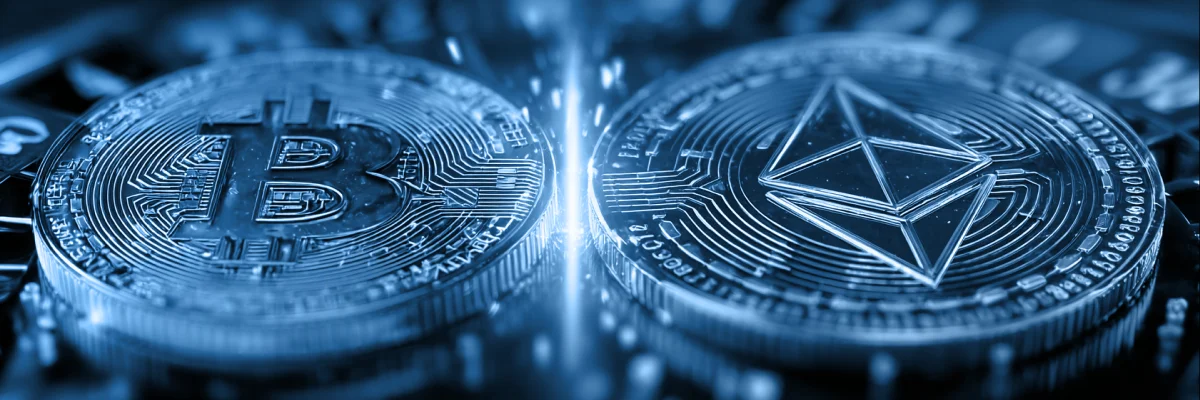
Neither Bitcoin nor Ethereum is objectively better for casino gambling — each suits a different type of player. Bitcoin offers wider acceptance and stronger brand recognition. Ethereum delivers faster transactions and smart-contract-powered games. This guide compares fees, speed, game variety, privacy, and bonuses so you can choose the right crypto for your needs.
Bitcoin (BTC) — the first and most widely recognised cryptocurrency, created in 2009 as a peer-to-peer payment system (Bitcoin whitepaper — bitcoin.org). Ethereum (ETH) — a blockchain platform launched in 2015 that supports smart contracts and decentralised applications (Ethereum Foundation — ethereum.org).
A Bitcoin casino accepts BTC for deposits and withdrawals. An Ethereum casino does the same with ETH. Many crypto casinos now accept both, along with stablecoins like USDT. The real differences lie in transaction speed, fees, and the type of games each blockchain supports.
Bitcoin casinos dominate the market in sheer numbers. Ethereum casinos stand out for provably fair gaming and automated payouts. If you want a detailed breakdown of each option, read our guides on the best Bitcoin casino and gambling with Ethereum.
Ethereum processes transactions faster than Bitcoin on the base layer. An ETH transaction confirms in roughly 12 seconds per block, with most casinos requiring 6–12 confirmations. That means deposits credit within two to five minutes.
Bitcoin confirmations take around 10 minutes per block. Most casinos require one to three confirmations, so a BTC deposit can take 10 to 30 minutes. Network congestion can push that higher.
Both networks offer Layer 2 solutions for near-instant transfers. Bitcoin’s Lightning Network settles payments in under a second with fees below $0.01. Ethereum’s Layer 2 rollups — such as Arbitrum and Optimism — offer similar speed. For example, at Betpanda, crypto deposits confirm within minutes for both BTC and ETH — a typical processing time at crypto casinos that support multiple chains.
Ethereum fees dropped sharply after the network’s upgrades. In 2025, the average ETH transaction fee fell to around $0.38 (Etherscan — Average transaction fee). Bitcoin’s average fee sat closer to $1.74–$3.95, depending on the source and time period.
Gas fee — the cost of processing a transaction on the Ethereum network, measured in gwei (a fraction of ETH). Ethereum’s EIP-1559 upgrade introduced a dynamic base fee that adjusts with demand. Bitcoin fees depend on transaction size in bytes and mempool congestion.
Layer 2 solutions reduce fees for both. Arbitrum averaged just $0.03 per transaction in 2025. Bitcoin’s Lightning Network costs fractions of a penny. The table below summarises the fee comparison.
| Fee Type | Bitcoin (BTC) | Ethereum (ETH) |
| Average base-layer fee (2025) | $1.74–$3.95 | $0.24–$0.38 |
| Layer 2 fee | < $0.01 (Lightning) | ~$0.03 (Arbitrum) |
| Fee volatility | High during congestion | Moderate (EIP-1559 smoothing) |
| Deposit confirmation time | 10–30 minutes | 2–5 minutes |
| Casino availability | Very high — most crypto casinos | High — growing rapidly |
Provably fair — a verification method that lets you check whether a game outcome was manipulated. The casino provides a server seed before each round, and you supply a client seed. After the round, you can verify the result using both seeds.
Ethereum’s smart contract architecture makes provably fair gaming easier to implement. A smart contract can hold funds in escrow, generate outcomes, and release winnings automatically — all on-chain and auditable (Ethereum smart contracts — ethereum.org). This removes the need to trust the casino’s internal software.
Bitcoin casinos can also offer provably fair games, but they rely on off-chain verification scripts rather than on-chain contracts. Both approaches work. Ethereum simply bakes the logic into the blockchain itself. Many casinos now offer a crypto casino welcome bonus that applies to both BTC and ETH deposits.
Both Bitcoin and Ethereum use public blockchains. Every transaction is visible to anyone with a block explorer. Neither coin is truly anonymous by default.
Bitcoin’s UTXO model makes it slightly harder to link transactions to a single user if you use fresh addresses. Ethereum’s account model ties all activity to one address, which makes on-chain tracking easier. In practice, most crypto casino players achieve privacy through the casino itself — not the blockchain.
If you use a no-KYC casino, your identity stays off the platform’s records regardless of which coin you choose. If privacy matters, focus on the casino’s data policy rather than the blockchain. Lightning Network transactions on Bitcoin add an extra privacy layer because they settle off-chain.
Bitcoin casinos have been around longer and typically offer the widest game libraries. Slots, table games, live dealer, and sports betting are standard. Most major game providers support BTC deposits.
Ethereum casinos match this range at established platforms. They also offer blockchain-native games — decentralised dice, crash, and lottery games powered by smart contracts. These games appeal to players who want full transparency over every outcome.
If you use Betpanda, you will find thousands of slots, table games, and live dealer titles that accept both BTC and ETH deposits — a standard offering on multi-currency crypto casinos. The practical difference in game selection between BTC and ETH is shrinking as more platforms go multi-chain.
| Criteria | Bitcoin Casino | Ethereum Casino |
| Transaction speed | 10–30 minutes (base layer) | 2–5 minutes (base layer) |
| Average fee | $1.74–$3.95 | $0.24–$0.38 |
| Provably fair games | Off-chain scripts | On-chain smart contracts |
| Privacy | UTXO model + Lightning | Account model (less private) |
| Casino availability | Highest — accepted almost everywhere | High — rapidly growing |
| Game selection | Wide — all standard categories | Wide + blockchain-native games |
| Layer 2 support | Lightning Network | Arbitrum, Optimism, zkSync |
| Price volatility | High | Higher |
Bitcoin suits players who want maximum compatibility and a well-established ecosystem. Ethereum suits players who value speed, lower fees, and smart-contract transparency. Many experienced players hold both and choose based on the specific transaction.
Bitcoin and Ethereum each bring distinct advantages to crypto gambling. Pick BTC for broad acceptance and Lightning speed, or ETH for low fees and smart-contract games. If gambling causes you concern, contact GamCare for free, confidential support.
Yes. Most crypto casinos accept multiple cryptocurrencies. You can deposit in BTC and withdraw in ETH, or vice versa, depending on the platform’s wallet options.
Ethereum typically costs less per transaction on the base layer. Bitcoin’s Lightning Network offers the lowest fees overall, often below $0.01.
Most casinos offer the same bonus structure regardless of the crypto you deposit. The bonus value usually converts to a USD or EUR equivalent. At most crypto casinos, including Betpanda, welcome bonuses apply equally to BTC and ETH deposits.
Both blockchains are secure. Your safety depends more on the casino’s licensing, reputation, and security practices than on the cryptocurrency you use.
Unlikely in the near term. Bitcoin remains the most widely accepted crypto at casinos. Ethereum is growing but complements BTC rather than replacing it.

A $20 crypto casino deposit can cost you anywhere from less than $0.01 to over $5 in network fees, depending on which coin and network you use.

Neither Bitcoin nor Ethereum is objectively better for casino gambling — each suits a different type of player.

Most no-KYC casinos skip identity checks for small deposits and withdrawals, but many still flag large wins for manual review.

KYC (Know Your Customer) — a set of identity verification procedures that financial institutions and gambling operators use to confirm who their customers are.

Betpanda does not offer a native mobile app on the Apple App Store or Google Play.

Most crypto casinos deliver their mobile experience through a PWA (Progressive Web App), not a native app you download from an app store.

The safety of crypto casino apps for UK players depends almost entirely on the licence the operator holds.

You deposit anonymously on Betpanda by sending cryptocurrency directly from a private wallet — no bank details, no card numbers, and no personal financial trail.

Unverified casino accounts typically cap withdrawals at a few hundred pounds, while fully verified accounts can process tens of thousands per month.