


 Casino
Full House Poker Hand Ranking & Probability
Poker is a game of skill, strategy, and probability. Among the various hands in poker, the full house poker hand stands out as a particularly strong combination.
May 25, 2026
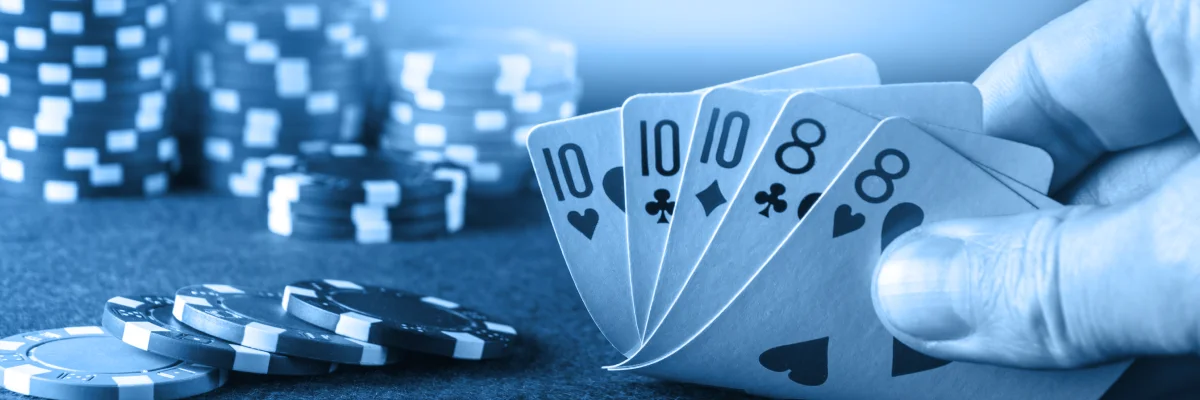
Poker is a game of skill, strategy, and probability. Among the various hands in poker, the full house poker hand stands out as a particularly strong combination. Understanding the ranking and probability of a full house poker hand is essential for any player aiming to improve their game, whether enjoying a table game with crypto at Betpanda or in friendly home games. This article explores the full house poker hand in depth, covering its definition, ranking, probability, and strategic implications.
A full house poker hand is a five-card poker hand consisting of three cards of one rank and two cards of another rank. For example, a hand with three kings and two sevens (K♠ K♦ K♣ 7♠ 7♥) is called “kings full of sevens.” The term “full house” is sometimes referred to as “a boat” in casual poker language.
The combination of these two elements creates the full house poker hand. The rank of the three-of-a-kind part determines the strength of the full house when compared to others. For instance, aces full of kings (A♠ A♦ A♣ K♠ K♥) beats queens full of jacks (Q♠ Q♦ Q♣ J♠ J♥).
Why Is a Full House Important?
A full house poker hand is a high-ranking hand in poker, often strong enough to win the pot, especially in Texas Hold’em and Omaha. Its rarity and strength make it a hand that can extract significant value from opponents, particularly when played correctly.
Understanding the structure and naming of a full house poker hand is the foundation for grasping its place in poker hand rankings and its strategic value at the table.
To appreciate the strength of a full house poker hand, it’s essential to understand where it sits within the official poker hand rankings list. Poker hand rankings determine which hand wins in a showdown, and knowing these rankings is crucial for making informed decisions during play.
A full house poker hand ranks fourth in the standard poker hand ranking order, making it a powerful hand in most variants, including Texas Hold’em and Omaha. Here’s how it compares:
| Hand Type | Beats Full House? | Example |
| Royal Flush | Yes | A♠ K♠ Q♠ J♠ 10♠ |
| Straight Flush | Yes | 9♦ 8♦ 7♦ 6♦ 5♦ |
| Four of a Kind | Yes | 7♣ 7♦ 7♠ 7♥ 2♣ |
| Full House | – | K♠ K♦ K♣ 7♠ 7♥ |
| Flush | No | Q♣ 10♣ 7♣ 6♣ 4♣ |
| Straight | No | 10♠ 9♣ 8♦ 7♥ 6♠ |
If two players both have a full house poker hand, the winner is determined by the rank of the three-of-a-kind part. If those are equal, the pair is compared. For example:
Strategic Implications:
Understanding hand rankings and tiebreakers is essential for making the right moves and maximising your winnings with a full house poker hand.
The probability of making a full house poker hand depends on the poker variant and the stage of the game. In classic five-card draw, the odds differ from Texas Hold’em, where community cards are shared. Let’s break down the maths and practical odds for the most common scenarios.
In a standard 52-card deck, the probability of being dealt a full house poker hand in five-card poker is calculated as follows:
Probability:
\[ \text{Probability} = \frac{3,744}{2,598,960} \approx 0.00144 \text{ or } 0.144\% \]
In Texas Hold’em, players use two hole cards and five community cards to make the best five-card hand. The probability of making a full house poker hand by the river (all five community cards dealt) varies based on your hole cards and the board.
Common Scenarios:
| Scenario | Probability (%) | Odds Against |
| Five-Card Deal | 0.144 | 693 to 1 |
| Flopping Full House | 0.98 | 101 to 1 |
| Full House by River | ~8.5 | 10.8 to 1 |
The rarity of a full house poker hand stems from the need to combine two specific ranks in a five-card hand. This makes it a strong hand, often good enough to win, but also one that doesn’t appear frequently.
Practical Takeaway:
Understanding the probability of a full house poker hand helps you make informed decisions and manage expectations during play.
Grasping how to calculate poker odds for a full house poker hand can give you a strategic edge. Whether you’re playing at Betpanda or elsewhere, understanding the maths behind the odds helps you make better decisions.
Suppose you have pocket eights and the flop is 8♣ 5♠ 5♦:
Tip: Use poker odds calculators or charts for quick reference, especially when learning.
Understanding how to calculate poker odds for a full house poker hand empowers you to make strategic choices and enhances your appreciation for the game’s mathematical depth.
The full house poker hand is a formidable hand, but its value depends on context. Knowing when to maximise value and when to exercise caution is key to long-term success.
| Hand Type | Strength vs Full House |
| Four of a Kind | Stronger |
| Flush | Weaker |
| Straight | Weaker |
| Three of a Kind | Weaker |
Summary: The full house poker hand is a powerful hand, but context, board texture, and opponent tendencies should guide your actions. Strategic play maximises value and minimises risk.
Texas Hold’em is the world’s most popular poker variant, and understanding the odds of making a full house poker hand in this game is crucial for effective strategy.
| Situation | Probability (%) | Odds Against |
| Flopping Full House | 0.98 | 101 to 1 |
| Set to Full House | 33.4 | 2 to 1 |
| Two Pair to Full House | 16.7 | 5 to 1 |
You hold 8♠ 8♦ and the flop is 8♣ 5♠ 5♦:
Tip:Keep track of board texture and opponent behaviour to avoid running into stronger hands.
For quick decision-making, it’s helpful to memorise the poker hand rankings list. Here’s a concise reference:
| Rank | Hand Name | Description |
| 1 | Royal Flush | A-K-Q-J-10, all same suit |
| 2 | Straight Flush | Five consecutive cards, same suit |
| 3 | Four of a Kind | Four cards of same rank |
| 4 | Full House | Three of a kind plus a pair |
| 5 | Flush | Five cards, same suit, not consecutive |
| 6 | Straight | Five consecutive cards, mixed suits |
| 7 | Three of a Kind | Three cards of same rank |
| 8 | Two Pair | Two pairs of different ranks |
| 9 | One Pair | Two cards of same rank |
| 10 | High Card | None of the above |
Keep this list handy for reference during play, especially if you’re new to poker or learning the game’s nuances.
The full house poker hand is a powerful and rare poker hand, ranking just below four of a kind and straight flush. Understanding its probability, ranking, and strategic implications can help you make better decisions and enjoy the game more, whether you’re playing at Betpanda or elsewhere. Always play responsibly and use your knowledge to enhance your poker experience.
A full house poker hand is beaten only by four of a kind, a straight flush, or a royal flush. It beats a flush, straight, three of a kind, and all lower hands.
In five-card poker, the probability of being dealt a full house poker hand is about 0.144% (1 in 693 hands). In Texas Hold’em, the odds of making a full house poker hand by the river with a pocket pair are roughly 8.5%.
The hand with the higher three-of-a-kind wins. If both have the same three-of-a-kind, the higher pair wins.
Aces full of kings (three aces and two kings) is the strongest full house poker hand in standard poker, and whether does 2 aces beat a full house depends on the remaining cards in the hand.
Consider the board and your opponents’ tendencies. While a full house poker hand is strong, be cautious if the board allows for four of a kind or a straight flush.
Practice calculating odds, use reference charts, and play responsibly. Many online tools and calculators can help develop your skills.
Poker is a game of skill, strategy, and probability. Among the various hands in poker, the full house poker hand stands out as a particularly strong combination.

Phil Ivey is a name that resonates throughout the poker world.
Playing cards are a universal language of games, strategy, and symbolism.

Poker has long fascinated both casual fans and serious players, not just for the thrill of the game but also for the staggering fortunes amassed by its most successful participants.

Poker chips are an integral part of the game, whether you’re playing at a high-stakes casino, hosting a home game or even poker with two people, or participating in a major tournament.

Poker is a game of skill, strategy, and psychology, but at its core lies a simple mechanic that keeps the action moving: the blinds.

Value betting in poker is a cornerstone of profitable play, especially when your goal is to extract the maximum number of chips from your opponents.

Slow play is one of the most intriguing and misunderstood tactics in poker.
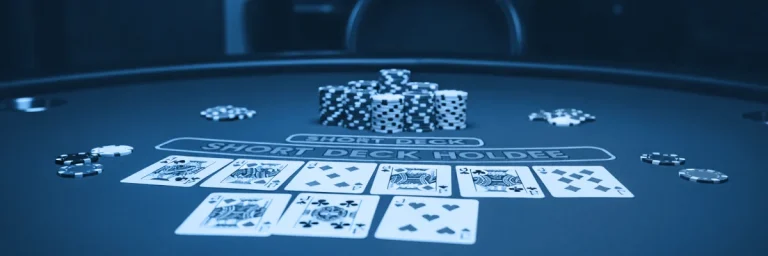
Short Deck Poker, also known as Six Plus Hold’em, has rapidly gained popularity in both live and online poker circles.