


 Casino
Full House Poker Hand Ranking & Probability
Poker is a game of skill, strategy, and probability. Among the various hands in poker, the full house poker hand stands out as a particularly strong combination.
May 25, 2026

Poker is more than a game of chance; it is a sophisticated contest of skill, strategy, and psychological insight. The best players blend mathematical precision with psychological acuity, navigating the intricate landscape of poker game theory. This synthesis of logic and intuition is what separates casual enthusiasts from serious competitors. Whether you play poker without chips online or at a live table, understanding the balance between the mathematical and psychological elements of poker is essential for making informed decisions and maximising your edge.
Poker game theory is the backbone of strategic decision-making at the table. At its core, game theory is the study of strategic interaction among rational players, where each participant’s choices affect the outcomes for everyone involved. In poker, this means predicting and countering opponents’ moves while optimising your own.
Game theory originated in mathematics and economics, focusing on how individuals make decisions in competitive environments. In poker, it provides a framework for analysing every possible action – bet, call, raise, or fold – based on the likely responses of your opponents. This approach helps you avoid predictable patterns and exploit weaknesses in others’ play.
A key concept in poker game theory is the Nash Equilibrium, named after mathematician John Nash. In simple terms, a Nash Equilibrium occurs when players adopt strategies that, given the strategies of others, cannot be improved upon. In poker, this means playing in such a way that your opponents cannot exploit you, no matter what adjustments they make. Achieving this balance is challenging, as it requires anticipating a wide range of possible actions and reactions.
Game Theory Optimal (GTO) play is the practical application of these principles. GTO is about constructing a balanced strategy that is difficult to counter, regardless of your opponents’ tactics. For example, mixing bluffs and value bets in a mathematically sound ratio prevents observant players from identifying exploitable tendencies. While GTO provides a robust foundation, it is not rigid; the most successful players know when to deviate from GTO to exploit specific opponents.
Poker game theory is not about memorising formulas – it’s about understanding the logic behind every move. By internalising these concepts, you can approach each hand with clarity, adapting your strategy to the ever-changing dynamics of the table.
The mathematical side of poker is indispensable for anyone aiming to play at a high level. Mastery of probability, expected value, and range-based thinking forms the bedrock of effective poker strategy. These concepts allow you to make rational decisions based on logic rather than emotion, giving you a clear advantage over less disciplined opponents.
At its heart, poker is a game of incomplete information. Every decision you make relies on calculating the likelihood of certain events – such as hitting a flush or your opponent holding a particular hand. Understanding poker odds means knowing how to convert the number of outs (cards that improve your hand) into probabilities. For instance, with four cards to a flush after the flop, you have nine outs. Using simple maths, you can estimate your chances of completing the flush by the river.
Expected value (EV) is a fundamental concept in poker decision making. EV represents the average amount you can expect to win or lose from a particular action over the long term. By comparing the EV of betting, calling, or folding, you can consistently choose the most profitable option. For example, if calling a bet will win you £100 half the time and lose you £50 the other half, the EV is positive, making the call correct in the long run.
Modern poker strategy has moved beyond putting opponents on a single hand. Instead, players think in terms of ranges – a spectrum of possible hands an opponent could hold based on their actions. Range-based thinking allows you to make more nuanced decisions, weighing the probability of various holdings against the potential rewards and risks. This approach is especially vital in online play, where physical tells are absent and mathematical reasoning takes centre stage.
Poker’s mathematical foundation is not about being a human calculator. It’s about using numbers to inform your instincts and guide your decisions, ensuring you play with discipline and consistency.
While maths provides the structure, psychology gives poker its depth and unpredictability. The psychology of poker encompasses reading opponents, managing your own emotions, and understanding the subtle dynamics at the table. These elements are crucial for gaining an edge, especially in situations where the maths alone cannot provide clear answers.
One of the most fascinating aspects of poker is the ability to read opponents. This involves observing betting patterns, timing, and physical cues – known as “tells” – to infer the strength of an opponent’s hand. While online play limits access to physical tells, timing and bet sizing still offer valuable information. Skilled players combine these observations with logic to construct accurate profiles of their opponents.
Poker can be emotionally taxing, especially during long sessions or after a series of bad beats. Emotional control is essential for maintaining discipline and making rational decisions. “Tilt” refers to a state of emotional frustration that leads to poor play. Recognising and managing tilt is a key psychological skill, allowing you to recover quickly and avoid compounding losses.
Your “table image” is how others perceive your playing style – tight, loose, aggressive, or passive. Savvy players use their image to manipulate opponents, setting up bluffs or value bets based on expectations. The “meta game” refers to the ongoing adjustments players make in response to each other’s strategies. This psychological chess match adds a layer of complexity to every hand, as players attempt to stay one step ahead.
The psychological elements of poker are as vital as the maths. By developing your observational skills and emotional resilience, you can turn the intangible aspects of the game into a tangible advantage.
The most successful poker players excel at integrating both the mathematical and psychological dimensions of the game. Knowing when to trust the numbers and when to rely on instincts is a delicate balancing act that evolves with experience.
While the maths of poker provides a solid foundation, there are moments when intuition and psychological insight are paramount. For example, if the maths suggests a marginal call but your opponent’s behaviour signals unusual strength, it may be wise to fold. Conversely, a mathematically sound bluff may succeed if you sense your opponent is playing cautiously. The key is to use maths as your baseline, but remain flexible enough to adapt to the unique dynamics of each hand.
Poker strategy often involves choosing between Game Theory Optimal (GTO) play and exploitative play. GTO aims for balance, making your strategy unexploitable. Exploitative play, on the other hand, seeks to capitalise on specific weaknesses in your opponents’ game. For instance, if you notice a player folds too often to river bets, increasing your bluff frequency can be highly profitable. The best players shift seamlessly between these approaches, using GTO as a safety net and exploitative tactics to maximise value when opportunities arise.
Adaptability is the hallmark of a great poker player. No two tables or sessions are identical, and the ability to adjust your approach is critical. This might mean tightening up against aggressive opponents or loosening up when the table is passive. The interplay between maths and psychology ensures that your strategy remains dynamic, responsive, and effective.
Balancing the logical and psychological aspects of poker is not a static skill – it’s a continual process of learning, adjusting, and refining your approach based on new information and experiences.
Understanding poker game theory and its mathematical and psychological components is only valuable if you can apply these insights in real-world scenarios. Whether you’re playing online or live, building a balanced strategy and avoiding common pitfalls are essential for long-term success.
Online and live poker each present unique challenges and opportunities. Online play, including BTC poker, emphasises mathematical analysis, as physical tells are absent and decisions must be made quickly. Players often rely on statistics, hand histories, and timing tells to gain an edge. In contrast, live poker offers more information through body language and table talk, making psychological skills more prominent. However, both formats require a solid grounding in poker game theory and the ability to adapt your strategy accordingly.
A balanced poker strategy incorporates both GTO principles and exploitative adjustments. This means mixing your play – sometimes bluffing, sometimes value betting, and always considering your opponents’ tendencies. For example, if you’ve established a tight image, you can exploit this by running well-timed bluffs. Conversely, if opponents perceive you as loose, value betting your strong hands becomes more profitable. The key is to remain unpredictable and avoid falling into easily exploitable patterns.
| Element | Online Poker Emphasis | Live Poker Emphasis |
| Maths/Statistics | High | Moderate |
| Psychology | Moderate | High |
| Timing Tells | High | Low |
| Physical Tells | N/A | High |
| Adaptability | Essential | Essential |
Many players fall into traps that undermine their long-term results. Over-reliance on maths can make your play robotic and predictable, while ignoring the numbers can lead to costly mistakes. Emotional decisions, such as chasing losses or playing on tilt, often result in suboptimal outcomes. Responsible play means recognising these pitfalls and maintaining discipline, regardless of short-term results.
Applying poker game theory effectively requires ongoing practice and self-awareness. By combining mathematical rigour with psychological insight, you can navigate the complexities of both online and live play with confidence.
Poker game theory is a dynamic blend of mathematics and psychology, each element reinforcing and enhancing the other. The synthesis of these disciplines allows players to make informed, balanced decisions in an environment defined by uncertainty and competition.
Continuous learning is vital. The game evolves, and so must your approach. By studying both the mathematical and psychological aspects of poker, you develop the flexibility and resilience needed to thrive at any table. Responsible play, grounded in logic and tempered by intuition, ensures that your enjoyment of the game remains sustainable and rewarding.
At Betpanda, we believe that understanding the interplay between maths and psychology is the key to mastering poker strategy. Our platform is designed for players who value both privacy and the thrill of strategic competition, offering a secure environment for exploring the depths of poker game theory.
By combining the principles of poker game theory with disciplined practice and responsible play, you can enhance both your enjoyment and your skill at the table.
Poker is a blend of both maths and psychology. The mathematical foundation guides your decisions, while psychological insight allows you to read opponents and adapt your strategy. Success comes from integrating both elements.
Game theory is crucial in modern poker, especially at higher levels. It provides a framework for balanced, unexploitable play and helps you understand the logic behind each decision.
While some success is possible through intuition and observation, a solid understanding of maths – such as odds and expected value – is essential for consistent, long-term results.
GTO (Game Theory Optimal) play aims for balance, making your strategy difficult to exploit. Exploitative play targets specific weaknesses in your opponents. The best players use both approaches, adapting as needed.
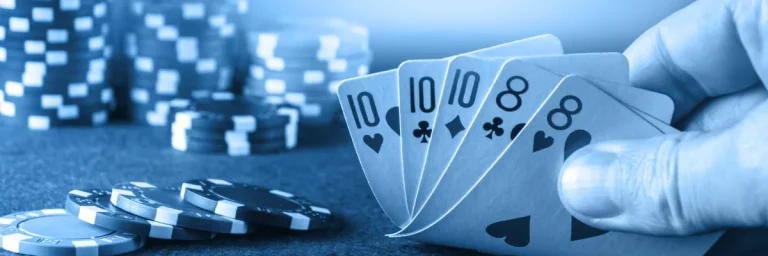
Poker is a game of skill, strategy, and probability. Among the various hands in poker, the full house poker hand stands out as a particularly strong combination.

Phil Ivey is a name that resonates throughout the poker world.
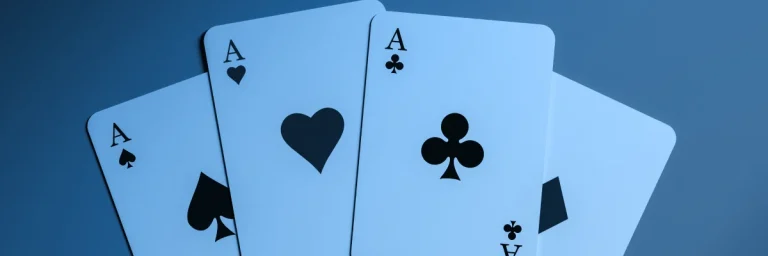
Playing cards are a universal language of games, strategy, and symbolism.

Poker has long fascinated both casual fans and serious players, not just for the thrill of the game but also for the staggering fortunes amassed by its most successful participants.

Poker chips are an integral part of the game, whether you’re playing at a high-stakes casino, hosting a home game or even poker with two people, or participating in a major tournament.

Poker is a game of skill, strategy, and psychology, but at its core lies a simple mechanic that keeps the action moving: the blinds.

Value betting in poker is a cornerstone of profitable play, especially when your goal is to extract the maximum number of chips from your opponents.

Slow play is one of the most intriguing and misunderstood tactics in poker.
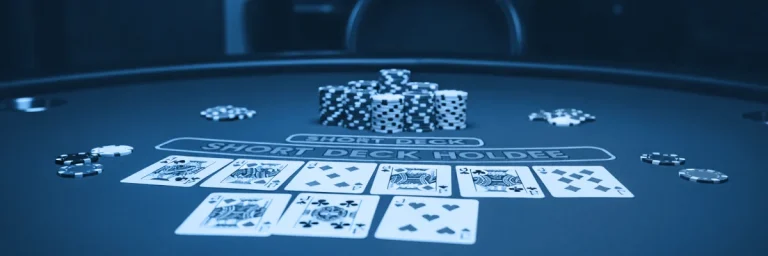
Short Deck Poker, also known as Six Plus Hold’em, has rapidly gained popularity in both live and online poker circles.